Which training system does Illinois Extension recommend for peaches and nectarines?
Select one answer.
Start with the problem: too much shade, too little fruit
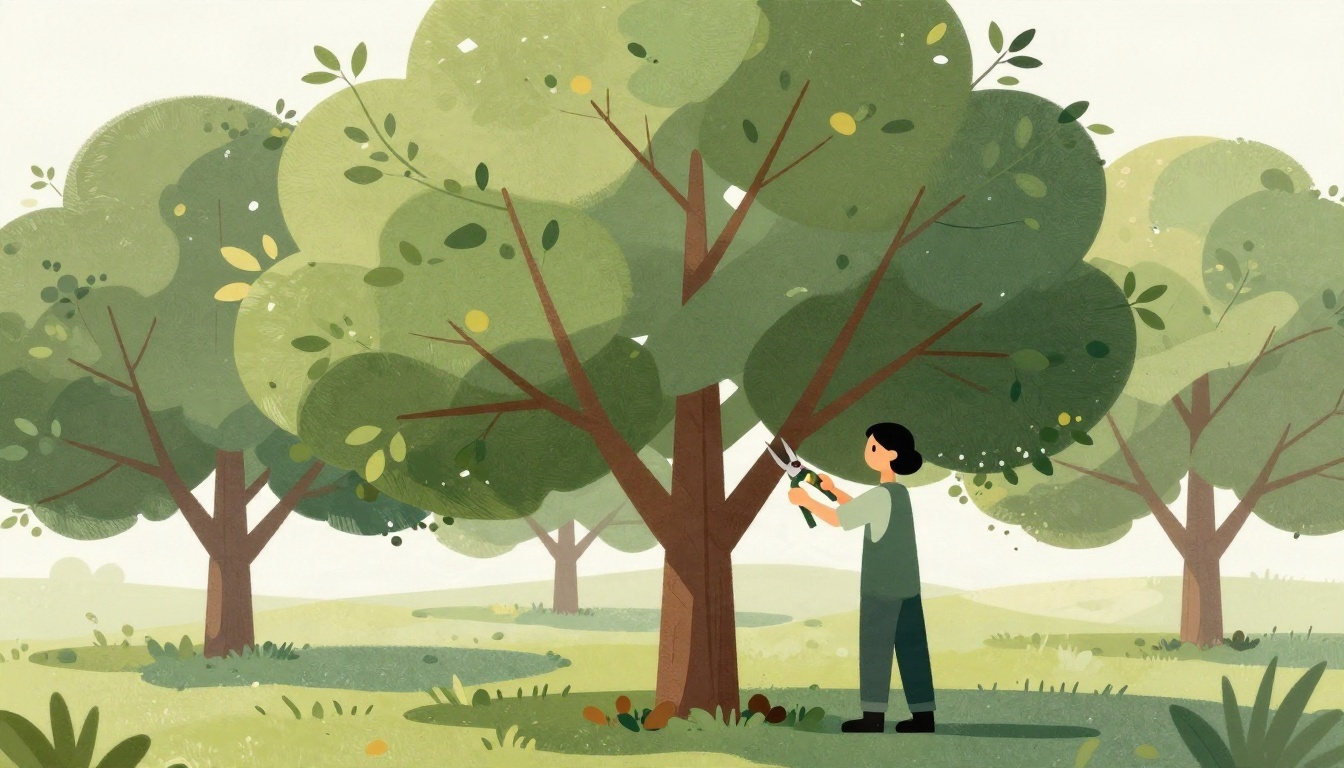
If your fruit tree is tall, dense, and producing most of its crop at the very top, pruning is the fix. An unpruned fruit tree becomes tall, dense, and unmanageable, and fruit production tends to be limited to the outer edges and the top where there is more sunlight, according to Illinois Extension. The interior turns into a tangled mass of branches with little productive fruiting wood.
Pruning is not random cutting. It is a management tool with three goals: maximize fruit production and quality, improve light and airflow, and maintain structural integrity and the tree's lifespan, as the Rhode Island Tree Council explains. This guide walks you through timing, shape, and the cuts that actually improve your harvest.
Prune in late winter dormancy
The best time to prune fruit trees is when they are fully dormant — after leaves have fallen but before buds break. Late winter is ideal. Pruning while the tree rests minimizes stress and sets the stage for vigorous growth in the coming season.
Avoid pruning in early fall or right after bud-break. Dormant-season pruning is the standard recommendation across extension guidance.
Choose the right training shape for your tree type
Fruit trees are trained into a shape, and the right shape depends on the species. Illinois Extension recommends two common systems:
- Central leader — one main trunk going straight up with scaffold branches radiating outward. Suggested for apples, pears, European-type plums, and sweet cherries.
- Open center — the central leader is removed and four or five main scaffold branches head out in different directions. Suggested for peaches, nectarines, and Japanese-type plums.
Why the difference? Pome fruits (apples, pears) produce fruit on spurs — short, permanent structures on wood two years or older — so pruning focuses on training a central leader to encourage sunlight penetration while preserving those long-lived spurs. Stone fruits (peaches, plums) produce fruit mostly on one-year-old wood, so pruning must stimulate vigorous new growth annually and maintain an open vase shape that delivers maximum sun into the tree's center.
Make thinning cuts, not heading cuts
The single most important technique: favor thinning cuts over heading cuts.
- Thinning cuts remove an entire branch back to the trunk or main scaffold. They open the remaining branches to airflow and sunlight.
- Heading cuts cut a branch back partway. They cause branches to bush out at the ends, reducing airflow and sun penetration.
Use thinning cuts to remove branches that grow in the same direction (competing with each other) or cross each other, as Seattle Urban Farm Co. describes.
Follow this cleanup order
Start every pruning session with cleanup before shaping. Illinois Extension's guidance: first remove any dead, damaged, crossing, and diseased branches. Only after that should you make structural and shaping cuts.
A practical checklist:
- Sharpen and clean your tools — hand pruners, loppers, and a pruning saw.
- Remove dead, damaged, diseased, and crossing wood first.
- Step back and assess the tree's shape against your chosen training system.
- Make thinning cuts to open the canopy to light and air.
- Remove no more than one-third of the tree in a single year.
- Prune every year to keep the tree within its allotted space and prevent limb breakage.
That one-third limit comes from University of Nebraska–Lincoln extension guidance, which also notes that clean pruning cuts minimize wound sites.
Why opening the canopy matters
Opening the canopy does more than let light in. It helps manage diseases and makes spray applications easier, because sunlight and air allow the canopy to dry out faster, per Illinois Extension. Better light also means better fruit color and size — the interior fruiting wood that was shaded can become productive again.
Common mistakes to avoid
- Doing nothing. The greatest mistake is usually no pruning at all. Trees can replace removed parts, but an unpruned tree keeps getting taller and denser.
- Heading everything. Cutting branch tips back everywhere creates a bushy, shaded canopy instead of an open one.
- Removing too much at once. Stick to the one-third rule.
- Pruning at the wrong time. Aim for full dormancy in late winter.
Quick reference
| Tree type | Training shape | Fruiting wood |
|---|---|---|
| Apple, pear | Central leader | Spurs on 2+ year-old wood |
| Peach, nectarine, Japanese plum | Open center | Mostly one-year-old wood |
How the Featured Expert Can Help
TerraFae Flowers offers sustainable landscape design and master pruning services, creating custom garden plans for clients. They also provide DIY garden packages and full design support, with an emphasis on sustainability and personalized service. If you want expert guidance on pruning or a plan for a productive home orchard, visit TerraFae Flowers.