
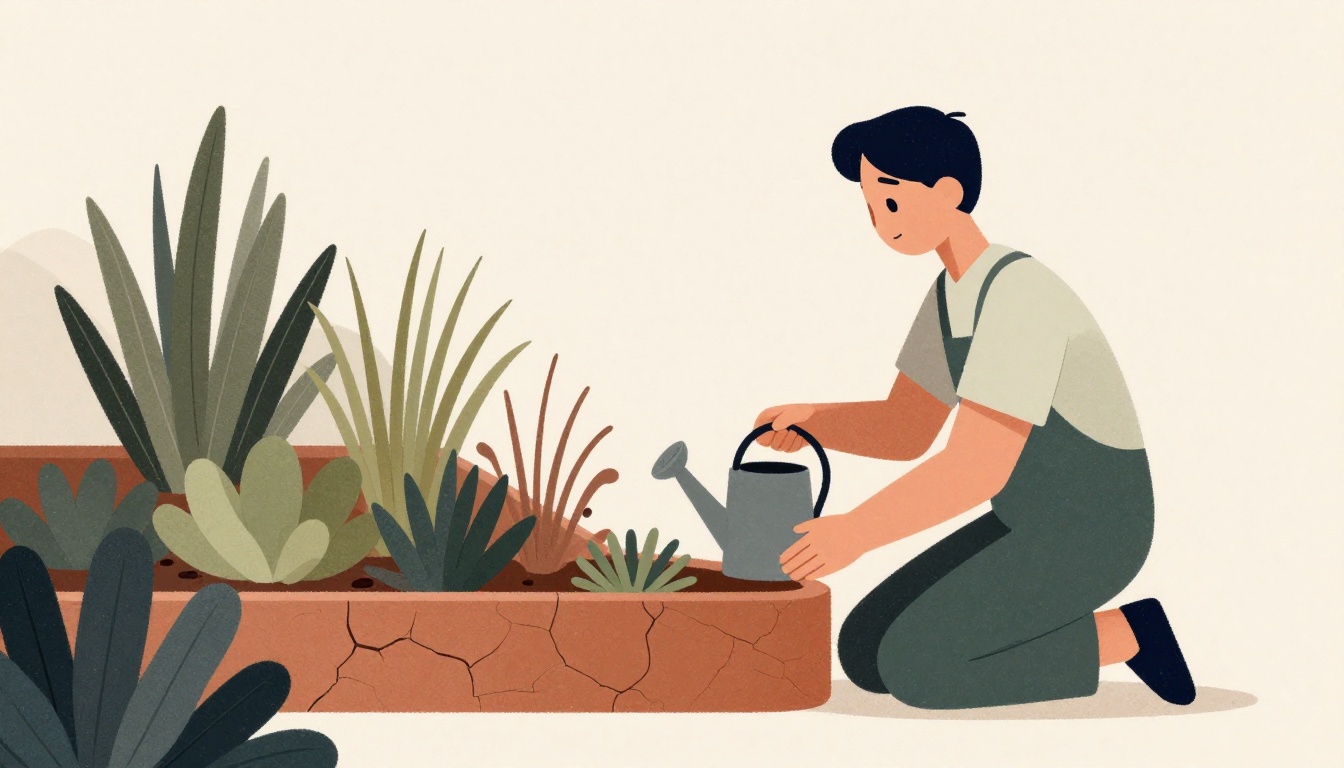
A low-water garden fails for one of two reasons: plants are grouped by looks instead of by water needs, or the soil never gets the preparation that lets roots survive a dry stretch. Fix those two things and you can cut irrigation while keeping color and structure in every season.
According to the UC Master Gardeners, hydrozone planning is based on which two factors?
Select one answer.
Start with a plan, not a plant list
Before buying anything, walk your yard and note sun exposure, soil type, and where water collects or dries out fastest. Proven Winners recommends siting plants according to these growing conditions and sketching a plan you can phase in over time.
This is also the moment to decide how much lawn you actually use. Reducing or eliminating turf is one of the fastest ways to cut water demand, because thirsty lawn is usually the largest single consumer in a home landscape.
Group plants by water need (hydrozoning)
Hydrozoning means putting plants with similar watering requirements together so one irrigation zone serves them all. The UC Master Gardeners of San Diego County explain that hydrozone planning is based on estimating your soil's drainage and water penetration, plus the root-absorbing depth of each plant type.
Their root-depth categories are a practical shortcut:
- Leafy vegetables and annual bedding plants: top 6 inches to 1 foot
- Cool-season turfgrass and flowering perennials: top 6 inches to 1.5 feet
- Shrubs, trees, ground covers, vines, and warm-season turfgrass: top 1 foot to 6 feet
- Succulents: shallow, water-storing roots that need the least frequent irrigation
Group by these layers, not by flower color. A bed that mixes lavender with moisture-loving nicotiana will never water correctly — one plant suffers no matter what schedule you set.
Fix the soil before you plant
Soil with good moisture control reduces how much water you need to add. Adding plenty of compost — store-bought or homemade — improves both drainage and water-holding capacity, which is what lets drought-tolerant plants bridge dry spells.
For rock or alpine-style plantings, Fine Gardening describes a standard mix of roughly 2 parts topsoil, 1 part sand, and 1 part small rounded stones. Match your amendment to the plants you chose, not the other way around.
Choose plants that earn their space
Drought-tolerant does not mean dull. Reliable performers include lavender, Russian sage, yarrow, coneflower, yucca, thyme, sedum, and ornamental grasses, which need little supplemental water once established. Garden Design notes that many ornamental grasses fit this category, and that asters — many native to North America — tolerate a wide range of conditions while feeding late-season pollinators.
For structure, consider olive, desert willow, strawberry tree, ginkgo, Chinese pistache, and Italian cypress, selected by hardiness zone. Groundcovers such as creeping thyme, succulents, bugleweed, and sedges fill gaps with minimal maintenance.
One caution: even drought-tolerant plants need water to get established. Expect extra irrigation in the first season and during extreme heat.
Water deeply, infrequently, and at the right time
Deep, infrequent watering pushes roots downward, where soil stays moist longer. Water in early morning or evening so more moisture reaches the root zone instead of evaporating. Mulch or rock reduces evaporation and moderates soil temperature.
Then verify instead of guessing. A soil probe or simple finger test tells you whether the root zone is actually dry before you turn the valve on.
A seasonal checklist
- Spring: top up mulch, check emitters, plant new additions into the correct hydrozone.
- Summer: water deeply and infrequently; watch the hottest, driest stretches and spot-water only the newest plants.
- Fall: the best window for planting trees and shrubs so roots establish before heat returns.
- Winter: leave seed heads and grasses standing for structure and wildlife; prune only what is damaged or crossing.
How the Featured Expert Can Help
TerraFae Flowers offers sustainable landscape design and master pruning services, creating custom garden plans for clients. They also provide DIY garden packages and full design support, with an emphasis on sustainability and personalized service. You can see their approach at terrafaeflowers.com.
If you want a low-water plan matched to your specific site — or guidance to install it yourself — start there.
Quick quiz
Test what you just read before you start digging.