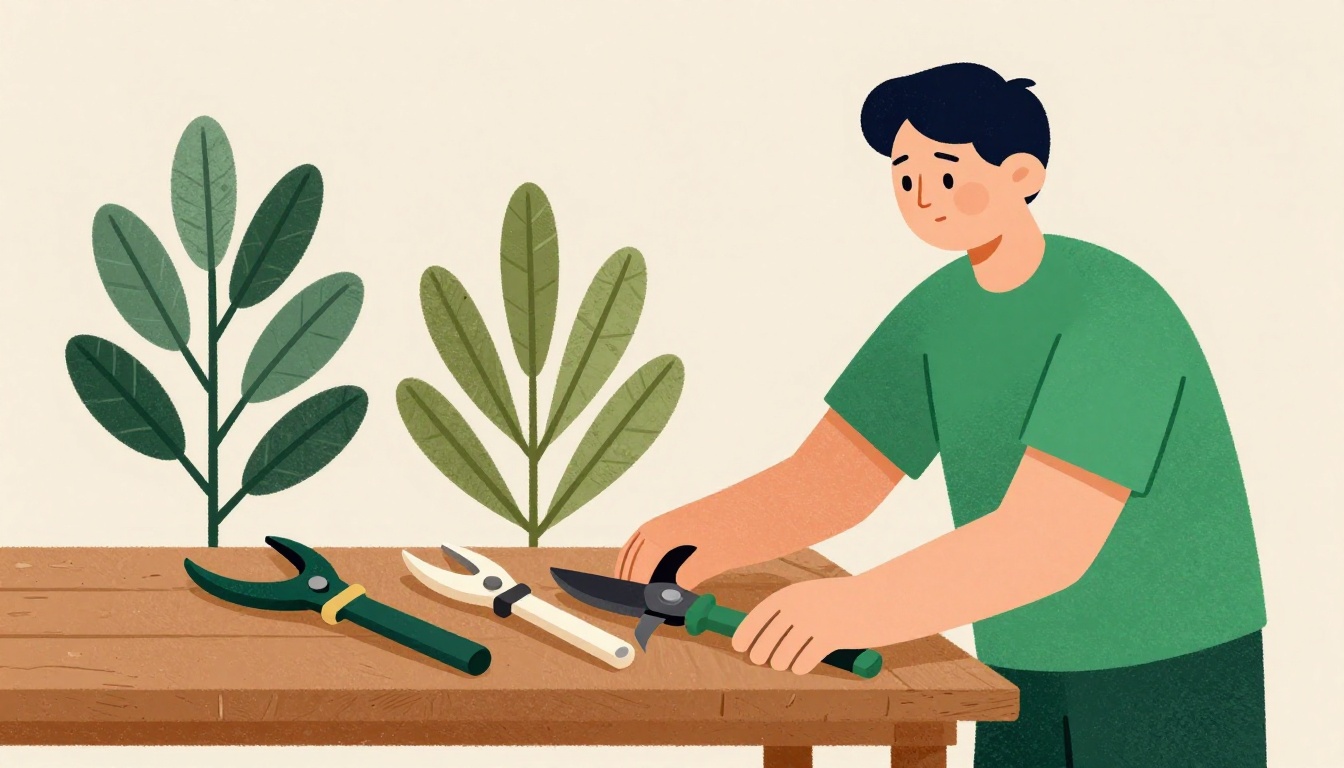
If your cuts look torn, crushed, or jagged, the problem is usually the tool, not your technique. Every pruning tool is engineered for a specific branch diameter, and using the wrong one damages both the plant and the tool. The fix is simple: measure the branch, then pick the tool built for that size.
According to extension guidance, what is the maximum branch diameter hand pruners are designed to cut?
Select one answer.
Match the tool to the branch diameter
Extension guidance is consistent on the size ranges. Hand pruners cut branches up to 3/4 inch in diameter, loppers handle branches from 3/4 to 1-1/2 inches, and a pruning saw is the right choice for branches larger than 1-3/4 inches (Iowa State Extension).
Here is a quick reference you can carry to the garden:
- Up to 3/4 inch: hand pruners (bypass style)
- 3/4 to 1-1/2 inches: loppers
- 1-3/4 inches and larger: pruning saw
- High branches within reach: pole pruners, which can cut limbs up to about 2 inches in diameter (PlantNebraska)
Trying to force hand pruners through a branch thicker than 3/4 inch often produces torn, jagged cuts and can damage the tool itself. That is the most common mistake homeowners make.
Bypass vs. anvil: the blade style that matters most
Both hand pruners and loppers come in two blade styles, and choosing the wrong one affects how well your plants heal.
Bypass blades work like scissors: a curved sharp blade passes next to a hook, slicing cleanly through the stem. They make close, clean cuts on live wood, which helps the plant seal the wound and regrow.
Anvil blades press a single sharp blade down onto a flat surface. They are effective on dead branches and less likely to jam, but they cannot cut as close and are more likely to crush stems on live wood (Iowa State Extension).
For most garden pruning, bypass is the preferred choice. Anvil tools are best saved for deadwood or dry, woody material. As one expert put it, anvil pruners "crush the soft tissue of the stem, stopping the flow of nutrients, prolonging the healing time for the cut surface" (Beyond the Garden Basics).
A practical tool checklist
Before you start pruning, run through this list:
- Measure the branch. If it is under 3/4 inch, reach for hand pruners. Between 3/4 and 1-1/2 inches, use loppers. Over 1-3/4 inches, use a saw.
- Choose bypass for live wood. Reserve anvil tools for dead branches and deadheading.
- Check your reach. Pole pruners let you cut high limbs up to about 2 inches without a ladder.
- Keep blades sharp. Sharp, properly used bypass pruners make close, clean cuts; dull blades crush and tear.
- Do not force a cut. If you are straining, you are using the wrong tool for that branch size.
- Know your limit. Branches larger than 3 inches, or any limb you cannot safely reach, are a job for a certified arborist.
Why clean cuts matter
A clean cut heals faster and closes over in days, while a crushed or torn cut can take weeks and leaves an open wound where disease can enter. Matching tool to branch size is not just about convenience; it directly affects plant health and how quickly your shrubs and trees recover.
How the Featured Expert Can Help
TerraFae Flowers offers sustainable landscape design and master pruning services, creating custom garden plans for clients. They provide DIY garden packages and full design support, emphasizing sustainability and personalized service. If you want expert guidance on pruning and plant selection for your space, visit TerraFae Flowers.
Test your knowledge
Think you can pick the right tool for the job? Try this quick question.
Quiz: According to extension guidance, what is the maximum branch diameter hand pruners are designed to cut?
- A) 3/4 inch
- B) 1-1/2 inches
- C) 2 inches